
The majority of rat proof valve models currently available on the market can conflict with the maintenance and upkeep of your drains. In other words, the very design that aims to add protection may also create new limitations when you need routine access for inspection, cleaning, or service.
Another major issue is that many were not designed for North American drainage systems, but rather for the UK, which is different.
Because of these design differences, the orientation and internal mechanism of some models can work against the way many North American drain lines are serviced. This often leads to practical problems when it’s time to perform standard maintenance or when a plumber needs clear access through the line.
As a result, common drain work can become difficult or even impossible without going through a reverse installation procedure, such as:
In many cases, these valves have an anti-rat flap that is permanently attached to the valve housing system. That permanent attachment can make the flap inaccessible and a non-removable component of the assembly. When the flap closes in the opposite direction, it can block the service path, preventing proper maintenance and servicing on your drains.
This creates a frustrating situation: the line may technically be “protected,” but servicing becomes more complex, more time-consuming, and sometimes more expensive because access is restricted. In real-world use, this can mean extra steps, extra labor, or the need to disassemble components just to perform tasks that should be straightforward.
Furthermore, you may not be able to service the flap, since it is not directly accessible or removable. If the flap wears out, sticks, becomes obstructed, or needs attention, it may require much more work than expected simply because you cannot reach it easily.
To better understand the manufacture, installation, and operation of some of these rat protection products, try searching Google for: Rat flap or Rat blocker.
Here are some models of rat-proof valves found with this Google search.
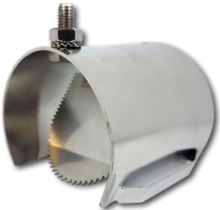
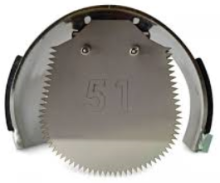
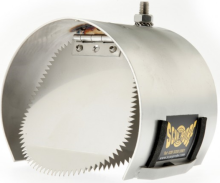
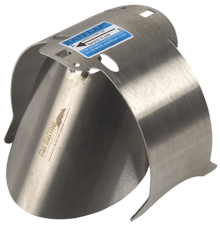
The Orientation
Most anti-rat valve models are made with teeth that point downward. When toilet paper and debris pass through, these teeth act like a rake and collect material until the flap can no longer close completely, creating an entry point for rodents.
The Weight of the Flap
Water and sanitary waste are drained by gravity. The flap tilts when water and debris hit it, depending on the slope of the pipes at the time of installation.
However, this slope does not always have, or no longer maintains, the proper angle for adequate drainage. In these situations, the weight of the flap becomes a critical factor affecting performance.
Given their insertion and pressure-fit installation method, many of these valves can become stuck to the pipe walls over time, making them difficult or impossible to remove without reversing the installation.
Forget these limitations and choose a solution designed for real-world use in North America.
Most Rat Proof Valves attempt to stop rodent entry by adding a fixed internal flap inside the valve body. The problem is that this “all-in-one” design often creates new issues: reduced access for inspection, restricted cleaning tools, and a flap mechanism that cannot be serviced without major work.
In other words, many Rat Proof Valves trade one problem for another.
The Rat-Proof Flap OUT was built around a simple idea: real protection should not block proper drain maintenance.
This solution works by replacing the original internal flap inside a standard non-return valve. The valve body remains in place, while the internal component is upgraded to improve protection.
The Rat-Proof Flap OUT is designed to help reduce the risk of rodent entry through drains while keeping the line fully serviceable.
What you gain without the common Rat-Proof Valves issues:
If you are researching Rat-Proof Valves for long-term protection, focus on a solution that protects while respecting the realities of drain maintenance. That is exactly what the Rat-Proof Flap OUT was designed to deliver.